

By Courtney Dynes – PT, DPT
IMPACT PT Oak Lawn
Trigger Point Dry Needle Basics
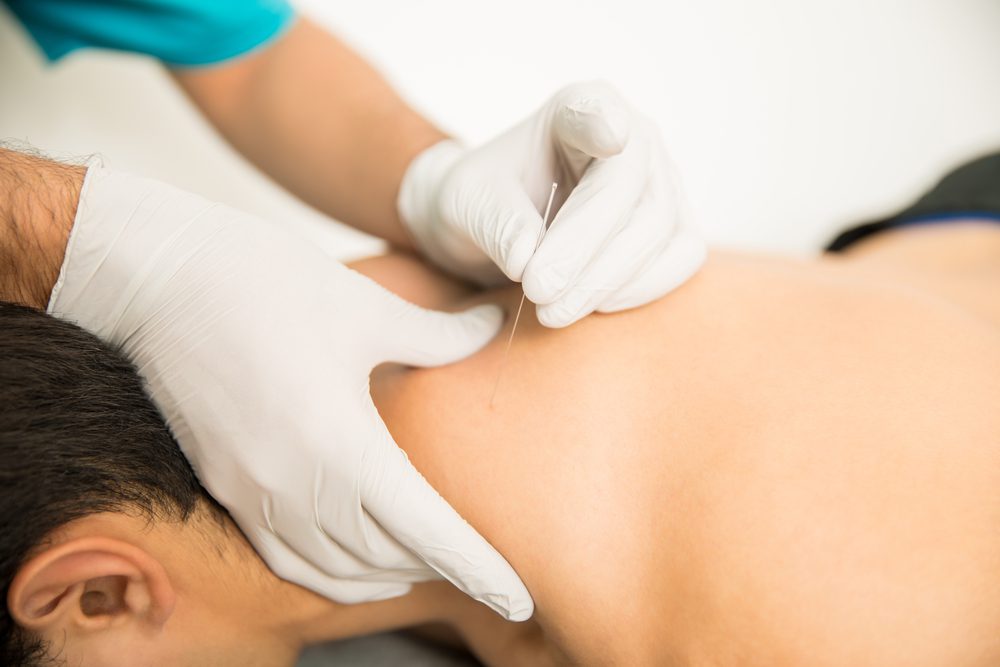
For many years, physical therapists have been utilizing a variety of techniques to address pain and dysfunction that is associated with myofascial trigger points, including trigger point dry needling. Dry needling therapy can help reduce local and referred pain, improve range of motion and muscle activation, and improve the chemical environment of trigger points. Learn more about myofascial trigger points and how dry needling can help with the team at IMPACT Physical Therapy.
What is a Myofascial Trigger Point?
A myofascial trigger point is defined as a highly localized and hypersensitive palpable nodule (“knot”) in taut bands of the skeletal muscle fibers[1]. Myofascial trigger points are locally painful upon compression but can also refer to pain in specific patterns throughout the body[2]. Trigger points form because of muscular overload and can cause pain, limitations in range of motion, and decreased function of the muscle.
Examples of Muscular Overload
Muscular overload has multiple causes and can be brought on by:
- Exertion overload (lifting weights)
- Repetitive stress overload (repetitive movements, sporting activities, gardening)
- Overload associated with posture
- Direct muscle trauma
While these muscular “knots” can be stubborn and difficult to reduce, trigger point dry needling is an intervention that has been found to be very useful in the management of myofascial trigger points and myofascial pain.
How Dry Needling Helps Trigger Points
Dry needling has been found to be helpful for a variety of musculoskeletal conditions. This includes acute or chronic tendonitis (lateral/medial epicondylitis), Achilles tendonitis, plantar fasciitis, headaches, overuse injuries, neck pain, back pain, piriformis syndrome, sciatica, muscle strains, and iliotibial band (ITB) syndrome. When the needle is inserted into a trigger point, a twitch response is elicited, which results in the release of muscle tension, improved circulation, reduction in pain, and thus, can lead to a patient’s return to normal activity! Trigger point dry needling is a safe and very effective technique that is intended to restore normal muscle function.
Contraindications for Dry Needling
Despite the benefits of dry needling, it’s not an appropriate treatment for every situation or person. Dry needling should be avoided with patients who have:
- Allergies to the needle material
- First trimester of pregnancy
- Needle phobia
- Skin lesions
- Varicose veins
- Implants in the area where the needling would be performed
- Abnormal bleeding conditions.
Dry Needling vs. Acupuncture
Dry needling is not the same as acupuncture. Trigger point dry needling is based on a thorough evaluation and movement assessment performed by a certified physical therapist, and it is only used to treat musculoskeletal pain. While both techniques use the same types of needles, acupuncture is based on eastern medicine principles focusing on points that correspond with Meridian Lines and restoring balance in the body.
Try Dry Needling Therapy Today
If you have stubborn trigger points that continue to be painful, or if you have tried a variety of manual therapy techniques and feel like you aren’t making any progress with your treatment, contact one of our clinics today. At IMPACT Physical Therapy, this technique is only performed by physical therapists who have completed certification courses in dry needling. Schedule a wellness screening to determine if dry needling is appropriate for you!
[1] D. G. Simons, J. G. Travell, and L. S. Simons, “Myofascial pain and dysfunction,” in The Trigger Point Manual. Upper Half of Body, p. 1038, Williams & Wilkins, 2nd edition, 1999.
[2] Dommerholt, Jan. “Dry Needling — Peripheral and Central Considerations.” The Journal of Manual & Manipulative Therapy 19.4 (2011): 223–227.