
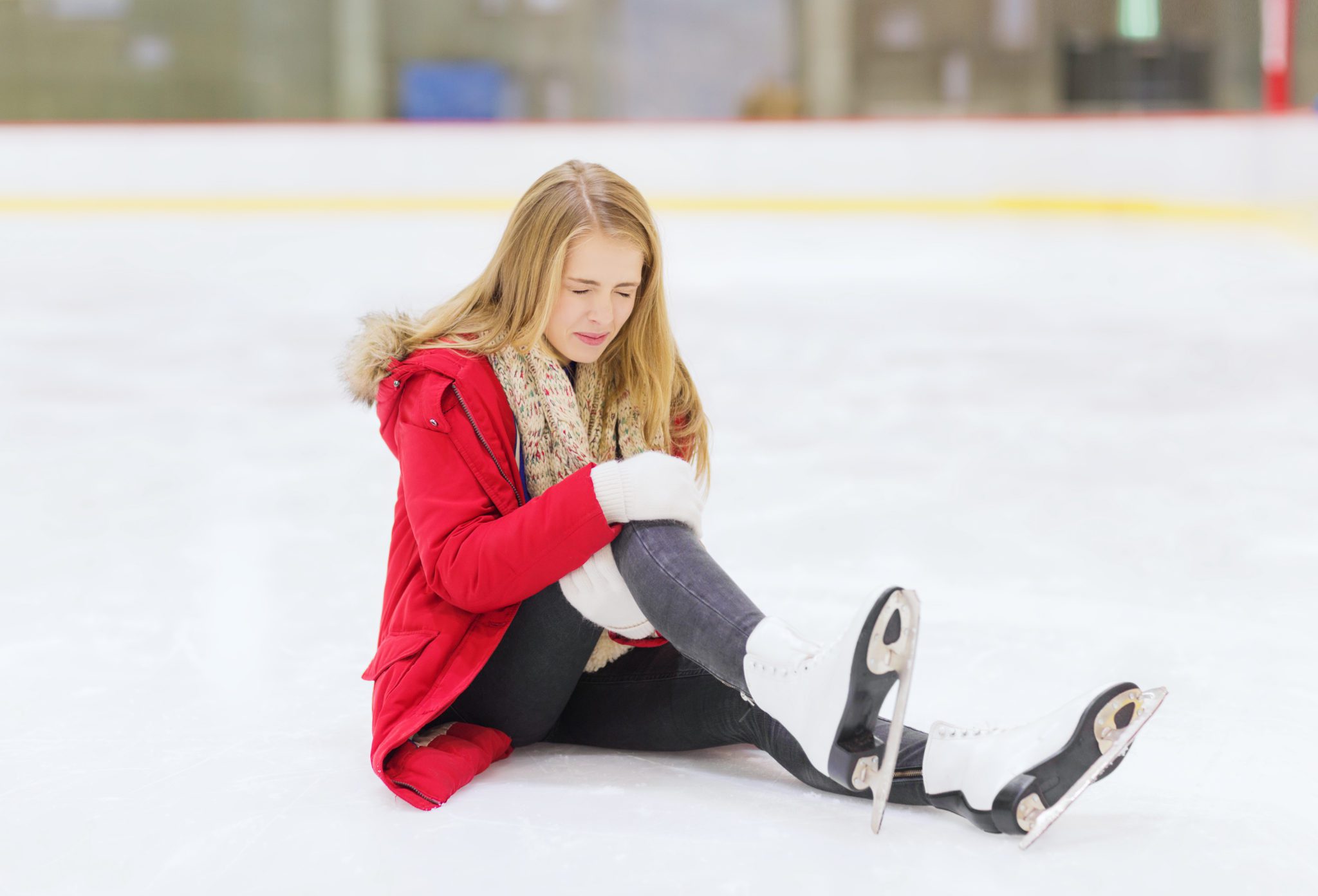

Ice skating injuries generally fall into two categories: overuse injuries and traumatic injuries. Ankle sprains, a traumatic injury, are the most common ice skating injury overall for figure skaters, while patellar tendinitis is seen most frequently across all skating disciplines. Female singles figure skaters are the most vulnerable to stress fractures resulting from overuse.
Looking to skate safely this winter? There’s a lot you can do to prevent ice skating injuries, from proper conditioning to getting the right ice skating gear. Our guide covers what you need to know to enjoy your time on the ice!
What are the Most Common Ice Skating Injuries?
Ice skating injuries due to overuse tend to involve damage or irritation of tendons in the foot, ankle, and shin. For recreational skaters, figure skaters, and ice hockey players, the majority of common acute ice skating injuries occur after a fall or a collision.
Most Common Overuse Ice Skating Injuries
- Jumper’s knee (patellofemoral syndrome)
- Apophysitis of the knee or hip
- Bursitis in the ankle
- Lace bite (tibialis anterior tendinopathy)
- Stress fractures to the foot or spine
- Shin splints and medial tibial stress syndrome
- Tendonitis of the Achilles, patellar, or peroneal tendons
- Muscle strains of the hip
Most Common Traumatic Ice Skating Injuries
- Ankle fractures and sprains
- Head injury and concussion
- Labral tears of the hip
- Lacerations
- Dislocation of the shoulder or patella
- ACL and meniscal tears
Preventing Ice Skating Injuries
Whether you’re a competitive figure skater, playing on an ice hockey team, or skating for fun on the ice skating ribbon at Maggie Daley Park, many ice skating injuries can be avoided with the proper precautions:
- Build core strength and fitness off the ice
- Spend 5 to 10 minutes warming up before putting on your skates
- Consider off-ice training with a harness to learn new jumps
- Young skaters should avoid learning new elements during growth spurts
- Have your skates fitted by a professional
- Maintain your skates by adjusting and sharpening the blades as needed
- Check the ice surface for chips or gouges
- Be honest about your fatigue level in order to avoid overtraining
- Avoid skating while in pain
- See a physician or physical therapist if pain persists
If you do need to recover from an ice skating injury, we have trained physical therapists in Central Illinois and the Chicagoland area. Our South Loop location is just a few minutes’ drive from the skating ribbon.
Best Ice Skating Gear for Staying Safe in the Rink
As we mentioned above, some ice skating injuries can be avoided with the proper gear. Here’s what to look for when you invest in ice skating gear:
Boot Stiffness
- Work with a professional who can assess the right boot and boot stiffness rating for your body type and skill level.
- Higher-level boots are generally stiffer than boots suited for beginners, and choosing a boot that’s too stiff for your skill level can result in injury.
- Recreational boots should have a support rating of between 15-20, but you should consider a stiffer boot rated between 20 and 30 if you’re taking figure skating lessons.
Blade Placement
- Blade placement is key to a pair of quality skates if you plan to spend any amount of time on the ice.
- Poor blade placement can cause you to skate more toward the inside or outside of the blade, which reduces stability and can make it easier to fall.
Blade Sharpness
- Advanced skaters will typically want sharper blades for finer control of their movements, but less experienced skaters should be wary of putting on a pair of skates that are too sharp.
- The sharper blades that allow advanced movements also tend to catch on the ice in certain positions, which could startle an inexperienced skater and lead to a fall.
Protective Ice Skating Gear
- Helmets, knee pads, and wrist splints are a must when playing ice hockey, but they’re not a bad idea for recreational skaters either.
- You should look for protective gear you’ll want to wear and keep wearing on the ice, so look for comfortable gear that’s practical for your skating.
Stay Safe On the Rink With IMPACT Physical Therapy
If you have a Chicagoland skating rink that’s convenient for you, there’s a good chance you have an IMPACT Physical Therapy location nearby, too. We have locations in the city near Maggie Daley Park and Gallagher Way as well as multiple suburban locations, like our Naperville physical therapy center near Millennium Carillon. Recovering from a skating injury? Request an in-person or virtual visit or stop by an IMPACT Physical Therapy location near you to get started.