

When Jaw and Facial Pain Disrupt Daily Comfort
TMJ dysfunction, also known as temporomandibular joint dysfunction, can affect much more than the jaw. Jaw and facial pain can interfere with daily activities such as talking, chewing and yawning. Many people also notice headaches, facial pain, or neck tension that makes it difficult to relax or focus throughout the day.
People often seek care when symptoms begin to affect quality of life or when discomfort spreads into the head, neck, or shoulders. At IMPACT Physical Therapy & Sports Recovery, physical therapy helps people with TMJ dysfunction in Illinois reduce jaw pain, improve movement, and regain comfort with everyday activities.
Why TMJ Dysfunction Develops and Why Relief Matters
The temporomandibular joints connect the jaw to the skull and play a key role in chewing, speaking, and facial expression. TMJ dysfunction can develop when these joints or surrounding muscles are not working together efficiently.
TMJ dysfunction may be caused by muscle tension, joint irritation, poor posture, teeth grinding, jaw clenching, stress, or trauma. Neck and upper-back posture can also influence how the jaw moves and functions. When pain persists, people often change how they chew or hold their jaw without realizing it, which can increase strain and prolong symptoms.
Addressing TMJ dysfunction early helps restore smoother jaw movement, reduce muscle tension, and support long-term comfort without invasive intervention.
Common Symptoms of TMJ Dysfunction
People with TMJ dysfunction may experience:
- Jaw pain or tenderness
- Facial or cheek pain
- Clicking, popping, or grinding in the jaw
- Difficulty opening or closing the mouth fully
- Headaches or migraines
- Ear pain or pressure without infection
- Neck or shoulder tension
- Pain with chewing or talking
Symptoms can vary depending on how the jaw, neck, and facial muscles are involved.
How Targeted Jaw and Facial Care Is Delivered
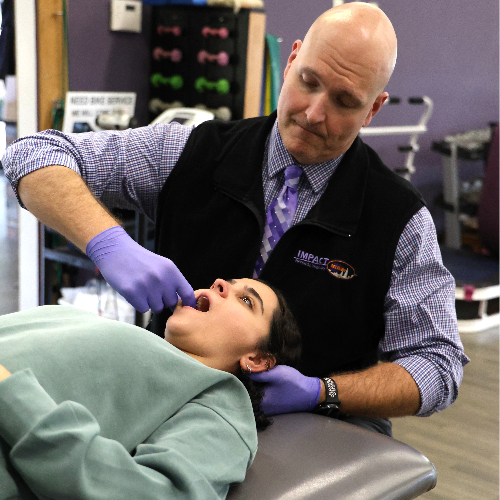
Care at IMPACT Physical Therapy & Sports Recovery focuses on understanding how jaw pain relates to posture, muscle tension, and movement patterns throughout the head, neck, and upper body. Physical therapists perform a detailed evaluation of jaw motion, cervical spine movement, muscle activity, and daily habits that may contribute to symptoms.
Client-specific approaches used for TMJ dysfunction may include:
- Manual therapy to the jaw, neck, and upper back, helping reduce muscle tension and improve joint mobility for more comfortable movement
- Postural retraining, addressing head and neck alignment to reduce strain on the jaw during daily activities
- Jaw mobility and control exercises, improving coordination during chewing and speaking
- Neuromuscular reeducation, helping the jaw muscles work together more efficiently
- Soft tissue techniques, used to address facial and cervical muscle tightness
- Movement retraining for daily habits, reducing clenching or guarding patterns
- Athletic training principles, when appropriate, to support individuals whose symptoms are affected by training, lifting, or upper-body activity
Each approach is selected to improve function and reduce discomfort during real-world activities.
Care Rooted in Skill, Precision, and Personal Attention
We aim to create a place where expert care meets genuine passion, and where every patient receives personalized, one-on-one attention in a warm and welcoming setting. Jaw and facial pain care at IMPACT Physical Therapy & Sports Recovery reflects this same philosophy.
We’ve grown with one purpose in mind: helping people get back to doing what they love using highly skilled manual techniques. This commitment guides TMJ care across Illinois, with an emphasis on clear communication and individualized treatment.
Support for Comfortable Jaw Movement
If jaw or facial pain is affecting your ability to eat, speak, sleep, or relax, contact IMPACT Physical Therapy & Sports Recovery to request an appointment and learn how physical therapy can help improve jaw movement, reduce tension, and restore daily comfort.
Frequently Asked Questions About TMJ Dysfunction
Can physical therapy help jaw pain without dental treatment?
Why does jaw pain often come with headaches or neck tension?
Is TMJ dysfunction related to stress or clenching?
We provide tmj dysfunction relief and jaw pain relief in the following clinics: Champaign, IL, Hinsdale, IL, Lakeview, IL, Naperville, IL, Norridge, IL, South-Loop, IL