
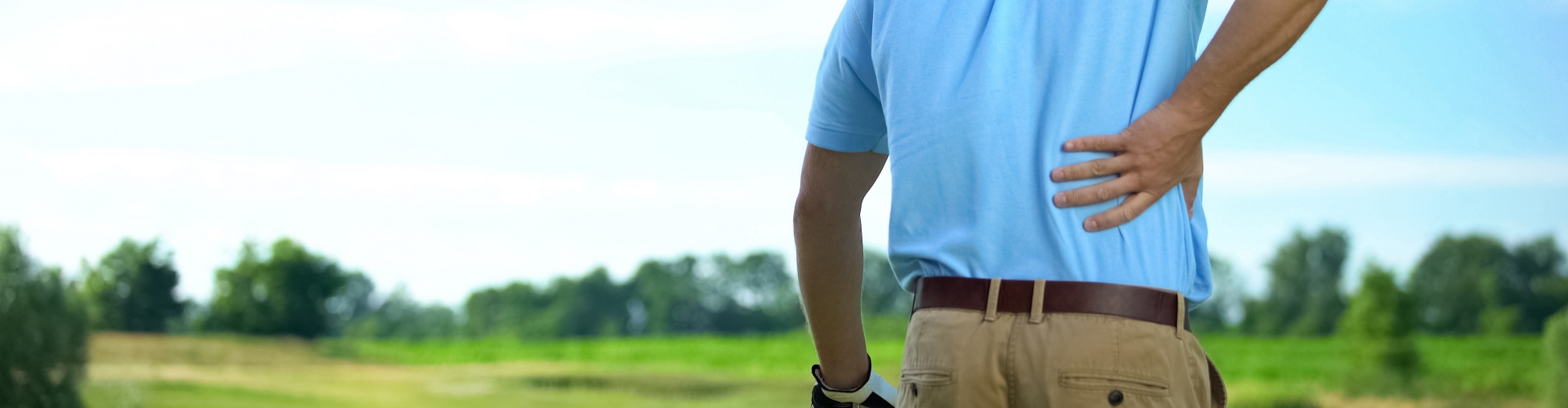
When Back and Leg Pain Disrupt Daily Life
Back pain and sciatica often affect more than comfort. They can limit work, sleep, exercise, and confidence with everyday movement. Some people experience pain centered in the lower back, while others notice symptoms that travel into the hip, leg, or foot. Many patients feel frustrated when discomfort lingers, returns frequently, or makes movement feel unreliable. That’s why they turn to IMPACT Physical Therapy & Sports Recovery for back pain and sciatica relief in Illinois.
If you have low back pain, you are not alone. At any given time, about 25% of people in the United States report having low back pain within the past 3 months. For many people, symptoms improve on their own. For some people, back pain and sciatica can return or hang on, leading to a decrease in quality of life or even to disability.
At IMPACT Physical Therapy & Sports Recovery, physical therapy focuses on restoring movement, improving strength, and helping patients return to daily activities with confidence. If you are ready to experience true back pain or sciatica relief, get an appointment with a physical therapist in Champaign, IL, Hinsdale, IL, Lakeview in Chicago, IL, Naperville, IL, Norridge in Chicago, IL, Oak Lawn, IL, Orland-Park, IL or South-Loop in Chicago, IL today.
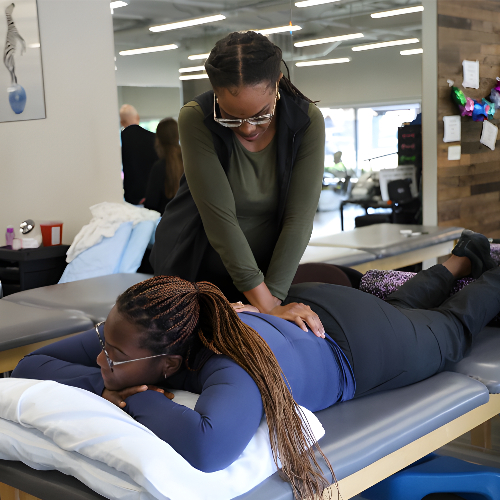
Common Back Pain Conditions
Post-Surgical
There are many surgical procedures for the low back including discectomies, laminectomies and even spinal fusion surgeries. The goal of most of these surgeries is to remove any broken bone, tissues or discs that may be pressing on exiting nerves from the spine. Furthermore, bringing stability to the spinal area is critical. It is important that you discuss with your physician conservative treatments first, such as physical therapy before surgery is absolutely necessary.
Compression Fracture
Compression fractures in the low back typically occur in older individuals and those suffering from osteoporosis. However, with severe trauma, such as in an accident, the force can cause a compression fracture in the bones of the spine (vertebrae). There are many minimally invasive surgical procedures today that can stabilize the broken area, such as kyphoplasty.
The goal with managing compression fractures is to stabilize pieces of bone from moving around and allow time for the bone to heal. Dealing with a compression fracture can be quite painful. Difficulty with getting up/down from bed, a chair and even difficulty walking are experienced.
Degenerative Diseases
Degenerative diseases of the spine fall under the categories of Degenerative Disc Disease (DDD) or Degenerative Joint Disease (DJD). In the spine, this is typically due to age and genetics. The wearing down of the joints or discs causes loss in normal height of the bony segments in the back. This can cause excessive joint pressures, bone on bone rubbing and increased inflammation. Typically with DDD or DJD comes stiffening of the spinal joints and weakening of key spinal muscles.
Spondylolisthesis
Spondylolisthesis is a condition by where one spinal bone (vertebrae) is not in alignment with the other. Typically, a slippage forward is found in the very low back at the 4th or 5th lumbar (low back) vertebrae. This is due to a stretching out of the ligaments that hold the bones together or possibly a fracture. With poor posture and weakened abdominals as well as spinal muscles, the increase in the angle of the spine becomes too much over time and misalignment of the bones occurs.
Symptoms can be mild such as general fatigue to the low back, achy pain or severe symptoms if there is compression on the nerves exciting the spine or spinal cord. There are varying degrees of severity. Most fall into a mild to moderate category that can be stabilized with improved posture and muscle strengthening. In severe cases, surgery may be necessary to fuse the area and bring stability back.
Herniated or Bulging Disc
A disc is a jelly like, fluid filled sac that acts as a cushion between the bones of your neck (vertebrae). Your discs change as you age, drying out and becoming more brittle. In addition, as the discs dry out with age, the change in height between the vertebrae decreases, causing changes in posture and function. In younger adults, the center of the disc (nucleus) is held in place by many rings of the disc (picture a cross section of a tree trunk). With minor or major injuries, poor posture and strain, these rings can rupture allowing a pressing outward of the disc nucleus. Finally, as the nucleus reaches the outer edges, the disc can begin to bulge, which in turn can rub and irritate nerve roots exiting your spine.
In more severe cases, the disc can become herniated, which further presses into the spaces where nerves are exiting. Symptoms can range from localized pain, to numbness / tingling to a specific part of the shoulder, arm or hands. In more severe cases complete lack of sensation, muscle weakness and paralysis of an area of the upper extremity can occur.
Changes in posture, strength and range of motion can all affect the positioning of the disc and how much bulging or herniation is occurring.
Spinal Arthritis
Spinal Arthritis is a very common area for osteoarthritis and rheumatoid arthritis. The low back takes a tremendous strain throughout our lifetime, supporting the body, moving, sitting and repetitively bending. In addition to these contributing factors, arthritis can also be affected by genetics, age, previous injuries, diet and exercise.
With abnormal forces on the back, the cartilage on the joints at each level of the spine can rub down causing even wear, build up of bone and eventually bone on bone rubbing. This can result in painful movement of the spinal joints and chronic, achy pain in the low back. Much like an arthritic knee, the spinal joints are helped through restoring natural movement, improving support from the spinal muscles and proper posture.
Spinal Stenosis
Spinal Stenosis is a condition that typically goes hand in hand with spinal arthritis. Spinal stenosis refers to a narrowing of the central spinal canal or the canals where the nerves exit the spine to the lower legs (called foramen). These canals are made up of overlapping spinal bones (vertebrae) over another. With degeneration of the spinal joints, collapsing of the disc height or abnormal bone growth, the canals can narrow. This leads to rubbing and even pressure on the nerves, which can cause a multitude of symptoms.
Sciatica
Sciatica is the term used to describe radiating pain into the buttock that can travel down the back of the thigh. Often this pain is achy and spread out along these areas. Sciatica is a result of irritation to the sciatic nerve, which travels deep in the buttock and down the back of the leg. In about 20% of people, the sciatic nerve pierces through the piriformis muscle deep in the buttock instead of under it. This can make the sciatic nerve more susceptible to irritation and pressure from the piriformis muscle. The piriformis muscle helps guide hip movement, but can become very tight with prolonged sitting. This increased tightness causes pressure and irritation to the sciatic nerve causing pain.
Why Relief Matters and Common Causes
Low back pain and sciatica can develop for many reasons. Repetitive stress, changes in activity levels, prolonged sitting, heavy lifting, or poor movement patterns often contribute to low back pain. Sciatica occurs when the sciatic nerve becomes irritated or sensitive, leading to pain, tingling, or weakness that may travel into the leg.
While the actual cause of low back pain and sciatica isn’t often known, symptoms usually resolve on their own. Research has shown that recovery depends on more than tissue injury alone. Psychosocial factors, such as self-confidence and a perceived ability to cope with a disability, have been shown to be predictors of who might not recover from low back pain as expected.
Timely physical therapy supports function and quality of life by improving movement quality, reducing unnecessary strain, and helping patients stay active during recovery.
Common Symptoms of Back Pain and Sciatica
People with back pain and sciatica may experience:
- Dull, sharp, or burning pain in the lower back
- Pain that travels into one or both legs
- Stiffness that limits bending or standing
- Weakness in the hips or legs
- Numbness or tingling in the leg or foot
- Reduced tolerance for sitting or standing
- Muscle tightness or spasms
- Difficulty returning to exercise or work activities
The symptoms of low back pain vary a great deal. Your pain might be dull, burning, or sharp. You might feel it at a single point or over a broad area. Sometimes, it might spread into one or both legs.
How Physical Therapy and Athletic Training Support Recovery
At IMPACT Physical Therapy & Sports Recovery, our care focuses on helping the body move better and tolerate daily demands. Treatment plans are individualized and may include the following approaches:
- Manual therapy to improve joint and soft tissue mobility, supporting smoother and more comfortable movement
- Therapeutic exercise to improve strength and endurance in the back, hips, and legs
- Movement retraining to address inefficient patterns that place stress on the spine
- Neuromuscular reeducation to improve coordination and control during daily tasks
- Athletic training services when appropriate to support return to sport or higher-level activity
- Progressive loading strategies to help the body safely adapt to physical demands
Each approach is selected based on how symptoms affect daily life and individual goals.
Services Performed for Treatment
Physical therapy care at IMPACT Physical Therapy & Sports Recovery may include a combination of services selected to support recovery and function, including:
- Trigger Point Dry Needling
- Athletic Training Services
- ASTYM® Therapy
- Applied Functional Science
- AlterG® Anti-Gravity Treadmill
- Active Release Techniques
These services work together as part of a comprehensive plan of care rather than as standalone treatments.
Care Guided by Experience and Personal Attention
IMPACT Physical Therapy & Sports Recovery provides physical therapy built around personalized, one-on-one care in a supportive environment. As a physical therapist-owned practice, the team values skilled hands-on treatment, clear communication, and measurable progress. Patients work directly with licensed professionals who guide care from start to finish, supporting consistency and trust throughout recovery.
This approach helps patients feel informed, supported, and confident as they return to the activities that matter most.
Take the Next Step Toward Relief
If back pain or sciatica is limiting your ability to move comfortably or stay active, contact IMPACT Physical Therapy & Sports Recovery to request an appointment and learn how our team can support better movement and long-term relief.
Frequently Asked Questions About Back Pain and Sciatica
What is the difference between back pain and sciatica?
Can physical therapy help sciatica without surgery?
Why does back pain or sciatica keep coming back?
We provide back and sciatica pain relief in all of our clinics: Champaign, IL, Hinsdale, IL, Lakeview in Chicago, IL, Naperville, IL, Norridge in Chicago, IL, Oak Lawn, IL, Orland-Park, IL and South-Loop in Chicago, IL